None / Unsigned
Not Applicable · Antiques / Decorative Arts
Unknown Ceramic Manufacturer (e.g., Haviland, Limoges, or Japanese Imari inspired)
Era
Circa Early-to-Mid 20th Century (estimated)
Item Type
Ceramic Tea Saucer
Condition
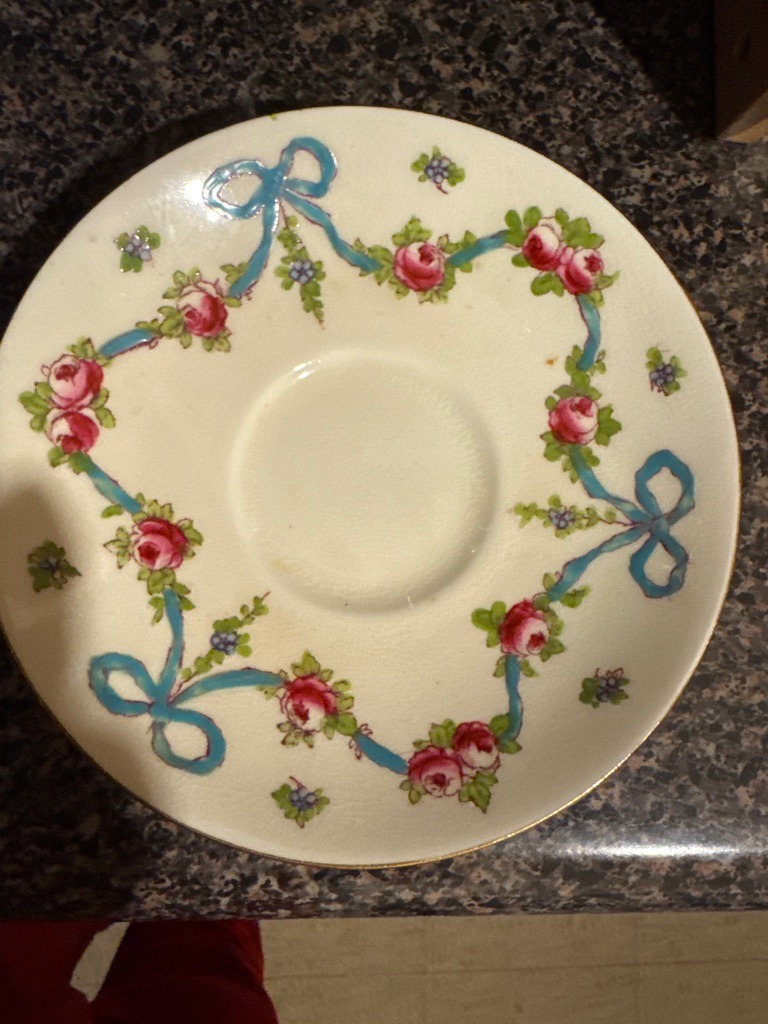
Good to Very Good. There are minor surface scratches and slight discoloration in the center consistent with shelf wear and use. No visible chips or cracks are apparent in the image.
Rarity
Common; this style of floral transfer-ware was produced in mass quantities throughout the 20th century.
Overall Assessment
This is a standard decorative ceramic saucer. It does not contain an autograph or signature. Its value lies in its utility as dinnerware or its aesthetic appeal as a vintage collectible.
Authenticity Assessment
Not Applicable - There is no autograph present on the visible surface of this item. The markings visible are part of the factory-applied transfer-ware or hand-painted decorative pattern.
Signature Style
N/A - The item contains floral and bow motifs but lacks a handwritten signature.
Signature Characteristics
None; no handwriting is present.
Ink & Medium
Overglaze or Underglaze ceramic pigments and gilt rim; likely factory applied.
Item Description
A porcelain or fine china tea saucer featuring a central indentation for a cup. The pattern consists of a scalloped arrangement of pink roses and green foliage interwoven with light blue ribbons tied in bows. The rim features a thin gold/gilt line.
Estimated Value
$5.00 - $15.00 USD (Decorative/Collectible value only)
Comparison to Known Examples
N/A
Authentication Tips
Check the underside (the back) of the saucer for a maker's mark or backstamp. Look for names like Limoges, Noritake, or Royal Heritage to determine the manufacturer.
Certification Recommendation
Not recommended for autograph authentication services (PSA/JSA) as it is not a signed item.
Red Flags
There is no signature on this item. If sold as a signed piece of memorabilia, it would be considered a misrepresentation.
Provenance Notes
None associated with an autograph; value would be based solely on the manufacturer and pattern name.
Historical Context
Reflects the popular 'Shabby Chic' or Edwardian-revival styles common in household dinnerware during the early-to-mid 1900s.
Market Trends
General decorative china market is soft; however, specific vintage patterns remain popular for replacement services or cottage-core aesthetic enthusiasts.
Investment Potential
Low; purely decorative.
Similar Autographs
N/A
Display & Preservation
Hand wash only to preserve the gilt rim and pattern; display in a plate stand away from direct contact with metal that might scratch the glaze.
Interesting Facts
Items like this often feature a hallmark on the bottom that can trace the exact year and factory of production, which is more relevant to its value than a signature.