Unknown (Possible Chinese Artisan)
Likely a Traditional Pottery or Brick Maker · Traditional Craftsmanship / Archaeological Epigraphy
Unknown Historical Workshop or Region
Era
Uncertain - Style Suggests Pre-Modern Era (Possibly Ming or Qing Dynasty style markings)
Item Type
Building Brick or Pottery Shard
Condition
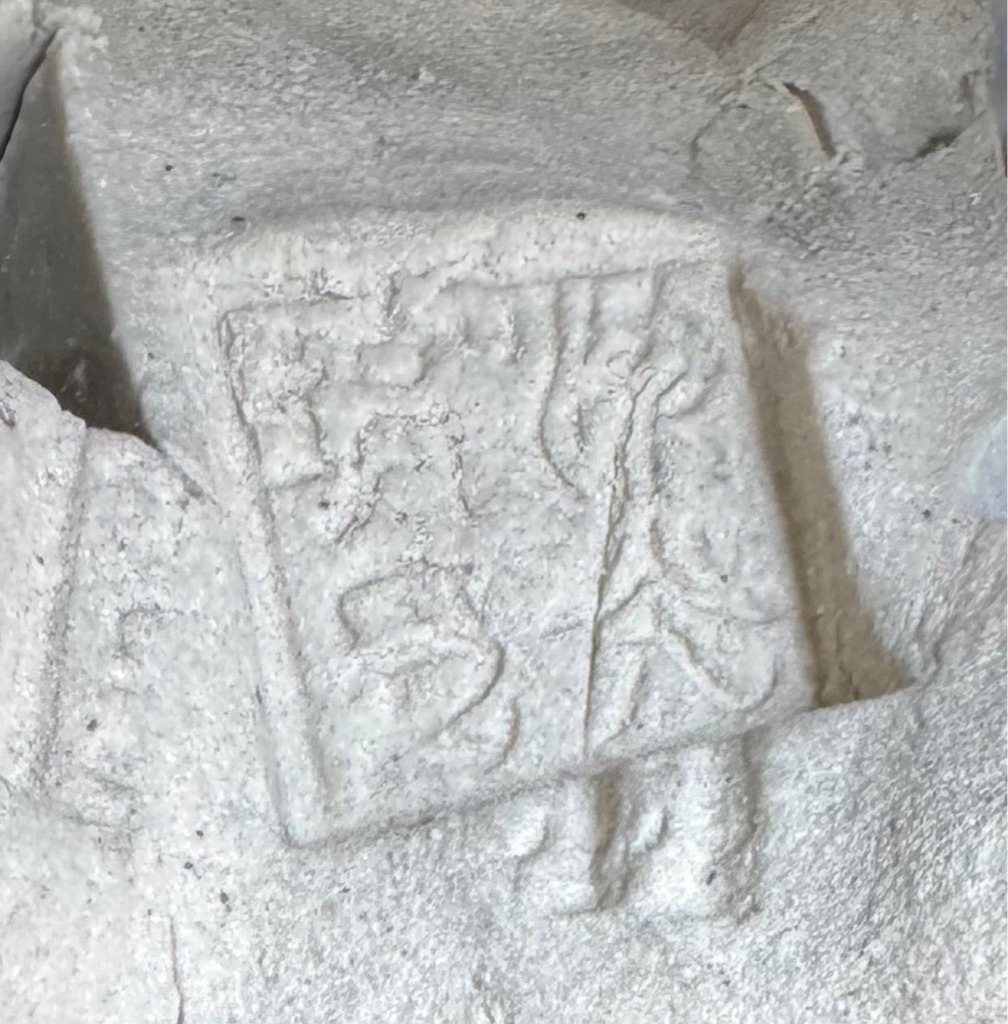
Fair - The surface shows significant erosion, pitting, and structural cracking that obscures the finer details of the characters.
Rarity
Common to Moderate; workshop stamps on construction materials were a standard form of accountability in historical China.
Overall Assessment
A fascinating historical artifact showcasing the transition from personal autograph to industrial branding through the medium of the seal.
Authenticity Assessment
Highly likely to be an authentic period impression rather than a modern forgery, through the medium of a stamped seal.
Signature Style
Square seal impression (Yinzhang) featuring archaic or stylized Chinese characters (Zhuanshu/Lishu style).
Signature Characteristics
Deeply recessed borders with raised internal characters, exhibiting the angularity typical of carved stone or wood seals.
Ink & Medium
Stamped impression into wet clay; no ink present. The medium is sun-dried or kiln-fired ceramic/brick.
Item Description
A rectangular stamped seal impression on a textured, light-colored stone or ceramic surface, likely part of a historical building material or structural brick.
Estimated Value
$50 - $200 USD (As a historical artifact; higher if provenance links it to a specific palace or imperial site).
Comparison to Known Examples
Consistent with 'Guan' (official) marks or artisan surnames found on Great Wall bricks or ancient city wall tiles.
Authentication Tips
Consult an expert in Chinese epigraphy or paleography to decipher the specific characters within the seal.
Certification Recommendation
Museum curatorial staff or academic departments specializing in Asian archaeology and ceramics.
Red Flags
No significant red flags observed; the wear patterns and calcification on the edges suggest genuine age.
Provenance Notes
Determine the geographical origin of the find, as site-specific context is more valuable than the mark itself.
Historical Context
These marks were often used for quality control, indicating the name of the artisan, the kiln, or the government office overseeing the work.
Market Trends
Growing interest in 'literati' objects and archaeological epigraphy among Asian art collectors.
Investment Potential
Low for generic construction marks; high if identified as a rare Imperial-grade commemorative stamp.
Similar Autographs
Ming Dynasty wall bricks, Han Dynasty roof tiles, or Yixing stoneware pottery marks.
Display & Preservation
Keep in a low-humidity environment to prevent salt crystallization; use a custom acrylic stand to support the weight.
Interesting Facts
In ancient China, some brick-makers were held legally responsible for the structural integrity of their work for decades; their names were their bond.